Why cTrader Is Starting to Appeal to India’s More Detail-Oriented Traders
Precision does not matter equally to traders at every stage of development. In the early stages of market engagement, when the primary challenge is understanding how instruments work and why prices move, platform choice is secondary to the more immediate demands of analysis and risk management. When those foundational questions are largely settled and attention shifts to execution quality, spread behavior in volatile conditions, and the structural nature of the broker-counterparty relationship, platform architecture begins to matter in ways that traders at earlier stages rarely anticipated. It is at this point that a growing number of Indian traders are discovering cTrader, and the experience tends to feel less like finding a new tool and more like finding an environment built around the questions they are now asking.
The execution transparency built into cTrader attracts Indian traders who have developed enough experience to think seriously about what happens between order submission and order fill. The platform’s Electronic Communications Network model routes orders to external liquidity providers rather than processing them through an internal dealing desk, establishing a different price discovery mechanism from the market-maker model most Indian traders encountered on their first platforms. Appreciating that difference requires some understanding of retail forex and CFD market structure, which is part of why cTrader tends to attract more experienced participants rather than novices who have not yet reached the point of viewing execution models as significant.
cTrader’s design philosophy has found a particularly receptive audience among India’s technology professionals, and the reasons connect to professional instincts that transfer naturally between a technology career and trading practice. Software developers and engineers who dedicate their workdays to the assessment of the systems based on transparency, reliability, and structural integrity and are not focused on the surface appearance can admit that the cTrader architecture is correlated with their routine evaluation standards. The platform’s detailed transaction records, transparent spread reporting, and comprehensive order execution history enable traders to audit their own fill quality over time, providing the kind of verifiable system behavior that technically minded users expect from the tools they rely on professionally.
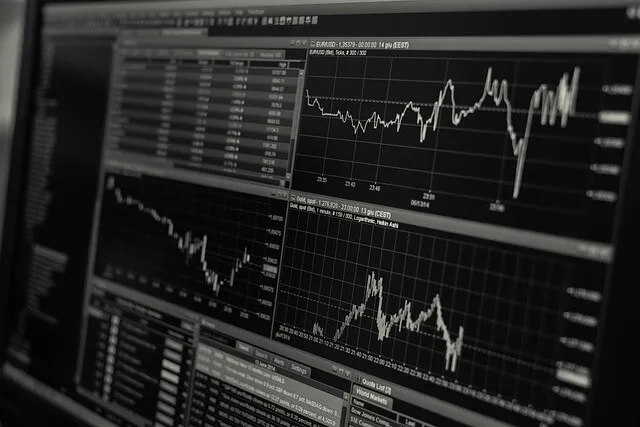
Image Source: Pixabay
The interface layout has drawn praise from Indian traders who find cTrader’s cleaner visualization more conducive to focused analytical work than MetaTrader’s denser layout. Part of that is subjective, and traders used to the MetaTrader layout might feel caught off guard by cTrader having a different layout instead of being immediately apparent. Those traders who make it through that initial adjustment always report that the interface ends up being intuitively real and not merely foreign to the existing conventions, as a design philosophy biased toward logical organization, as opposed to compatibility with established conventions. Indian traders who take the transition slowly and without the anticipation of immediate comfort tend to get into productive familiarity much faster than those who anticipate immediate familiarity with the new environment.
The cTrader community in India is at an earlier stage of development than the MetaTrader ecosystem, and that gap presents practical considerations for traders contemplating a transition. Hindi and regional language tutorials covering cTrader’s features and workflows are less available than comparable MetaTrader content, and the pool of Indian participants with enough platform experience to guide local trading communities is smaller. Those gaps are narrowing as the Indian cTrader user base grows and content creators recognize an underserved audience, but for now, Indian traders moving to cTrader must be more comfortable relying on English-language international community resources than those who remain within the highly localized MetaTrader ecosystem.
Traders who have made the transition and stayed describe a qualitatively different market experience, not because the analytical work has changed but because the execution environment is no longer a source of uncertainty. Knowing that fills reflect genuine market liquidity, that spread behavior during volatile conditions follows predictable structural rules rather than discretionary broker decisions, and that the platform’s transaction record provides a full audit trail of every order interaction, removes a layer of ambiguity that most traders do not realize they have been carrying until it is gone. For Indian traders who are detail-oriented and have reached the point where execution quality matters as much as analytical edge, that clarity is precisely what cTrader offers traders who have reached that level of market engagement.

Comments